13 Flipped Classroom Facts Every Educator and Parent Should Know
Education systems worldwide are undergoing a structural shift. Traditional lecture-heavy classrooms are increasingly being questioned for their effectiveness in developing critical thinking, independence, and real-world problem-solving skills. Among the alternative approaches gaining credibility is the flipped classroom model, which restructures how time and attention are used in the learning process. Rather than changing what is taught, it changes when and how learning occurs.
For teachers, this approach promises more meaningful classroom interactions. For parents, it offers a clearer window into what children are learning and how they engage with material. Understanding the realities of this method—beyond surface-level assumptions—is essential before adopting or evaluating it.
What Is a Flipped Classroom?
A flipped classroom is an instructional approach in which students engage with core instructional material before attending class, often through videos, readings, or guided resources. Classroom time is then reserved for applying that knowledge through discussion, problem-solving, and collaborative activities under teacher guidance.
The flipped classroom model is grounded in educational research that shows learners benefit more from active engagement than passive listening. Importantly, it does not eliminate teachers or structure. Instead, it redistributes effort so that students encounter complexity when support is available, not in isolation at home.
1. The Concept Is Older Than Its Name
Although the term flipped classroom gained popularity in the early 21st century, the underlying philosophy predates modern schooling. Educational theorists like John Dewey and Benjamin Bloom emphasized preparation, discussion, and application long before digital tools existed.
What changed was scale and accessibility. Recorded lectures and digital distribution made it easier to standardize pre-class instruction, allowing educators to systematically redesign how lessons unfold rather than relying on informal preparation.
2. Learning Begins Before the Bell Rings
In the flipped classroom model, students encounter new concepts prior to class through structured materials. These may include short lectures, guided readings, worked examples, or interactive modules designed to introduce foundational ideas.
This early exposure ensures that classroom time is no longer spent introducing basic definitions. Instead, learners arrive prepared to ask informed questions, engage in discussion, and apply what they have already encountered independently.
3. Classroom Time Becomes a Practice Space
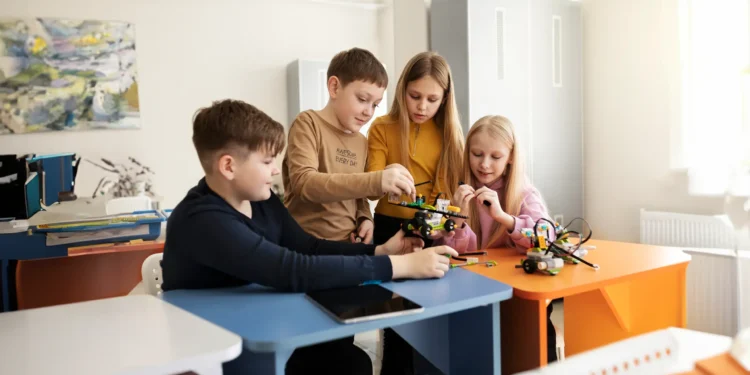
The most transformative change in a flipped classroom is how in-person time is used. Lessons emphasize applying concepts through real problems, debates, experiments, or collaborative projects rather than listening to explanations.
Teachers observe learning in action, allowing them to address misunderstandings immediately. Students benefit from peer interaction and guided support, which improves comprehension and retention.
4. Technology Is Helpful, Not Mandatory
While many examples rely on digital platforms, flipping does not require constant internet access. Schools have successfully implemented the model using printed packets, recorded lessons on shared devices, or offline media.
This flexibility makes the approach viable in diverse contexts, including rural and under-resourced environments. What matters is structured preparation, not the sophistication of tools.
5. Students Gain Control Over Learning Pace
One advantage of the flipped classroom approach is that students can revisit instructional material as needed. Unlike live lectures, recorded or written resources allow pausing, reviewing, and reflection.
This is particularly beneficial for students who need more time to process information or those who want to move ahead faster. It promotes autonomy without sacrificing structure.
6. Teachers Become Learning Guides
In this model, the teacher’s role shifts significantly. Instead of delivering information, instructors observe how students use knowledge and intervene strategically.
This allows teachers to provide targeted feedback, ask deeper questions, and support higher-order thinking. It also helps identify learning gaps earlier, before they become entrenched.
7. Active Learning Is Central, Not Optional
A flipped classroom prioritizes activities that require students to analyze, evaluate, and create. These tasks move beyond memorization and align closely with skills needed for higher education and employment.
Research consistently shows that active engagement improves long-term understanding. Students are more likely to retain knowledge when they use it meaningfully rather than passively receive it.
8. Equity Must Be Planned For
One challenge is ensuring all students can access pre-class materials. Without planning, differences in home resources can widen achievement gaps.
Successful implementations address this through school-provided devices, offline access options, flexible deadlines, or on-campus study time. Equity is a design responsibility, not an afterthought.
9. Parents Gain Greater Visibility
Parents often report increased awareness of what their children are studying. Seeing lesson materials firsthand helps families support learning more effectively.
This transparency can strengthen trust between schools and families, especially when expectations and goals are clearly communicated.
10. Academic Outcomes Can Improve
Studies indicate that when implemented well, a flipped classroom can improve test scores, conceptual understanding, and student confidence—particularly in STEM subjects.
However, results depend on instructional quality. Simply assigning videos without thoughtful in-class activities does not produce meaningful gains.
11. Students Need Time to Adapt
Many learners are unfamiliar with self-directed preparation. Teachers must explicitly teach how to engage with materials, take notes, and manage time.
Orientation sessions, modeling, and ongoing guidance are essential to help students develop these skills gradually.
12. Teachers Need Training and Collaboration
Designing effective pre-class materials and in-class activities requires planning and support. Professional development helps educators align assessments, content, and classroom practice.
Collaboration among teachers also improves quality and reduces workload through shared resources and strategies.
13. The Model Works Across Contexts
The flipped classroom has been adapted in primary schools, secondary education, universities, and vocational training worldwide. Its principles are flexible enough to fit different cultures and curricula.
What remains constant is the focus on preparation, interaction, and meaningful use of classroom time.
Conclusion
The flipped classroom is not a shortcut or a trend-driven replacement for teaching. It is a structured, research-informed approach that rethinks how learning time is used. When designed thoughtfully, it empowers students, supports teachers, and strengthens engagement.
For educators, it offers a way to maximize impact during limited classroom hours. For parents, it provides insight into a more transparent and participatory learning process. Understanding this model helps all stakeholders make informed decisions in an evolving educational landscape.