BandLab for Education: How Classrooms Are Becoming Recording Studios
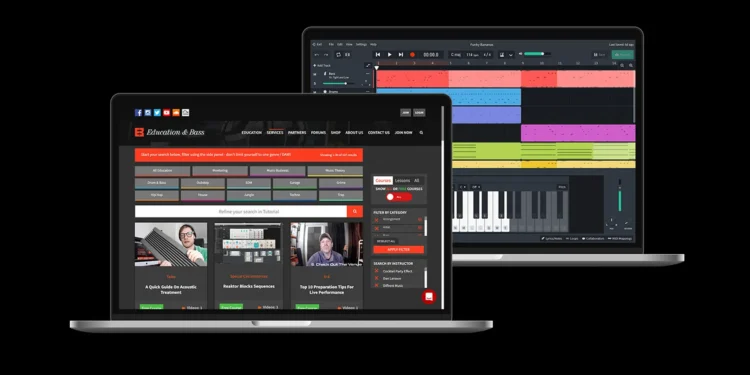
Music education is evolving faster than ever before. Where traditional classrooms once relied heavily on sheet music and acoustic rehearsals, today’s students are producing full tracks, experimenting with digital instruments, and collaborating online. At the heart of this transformation is BandLab for Education, a cloud-based music production platform designed specifically for schools. By removing financial and technical barriers, it allows classrooms to function more like modern recording studios than conventional lecture spaces.
Unlike expensive studio setups that require specialized hardware, BandLab for Education runs entirely in a web browser. Students can compose, record, edit, and mix projects using laptops or tablets, making professional-style production accessible regardless of school budget. This accessibility is reshaping how music is taught and experienced.
What the Platform Actually Is
To understand its impact, it helps to define what BandLab for Education offers. It is a secure, education-focused version of the broader BandLab platform, equipped with classroom management tools for teachers. Educators can create private digital classrooms, assign structured projects, review submissions, and provide feedback within one centralized dashboard.
Because BandLab for Education operates in the cloud, there is no need for complex installation or maintenance. Students can log in from school or home and continue working seamlessly. Automatic saving ensures that creative progress is never lost, and projects can be revisited at any stage for refinement.
1. From Passive Learning to Active Creation
One of the biggest shifts enabled by BandLab for Education is the move from passive performance to active production. Instead of only interpreting existing compositions, students build original tracks from scratch. They layer percussion, experiment with basslines, record vocals, and explore effects processing.
This hands-on creation process builds deeper musical understanding. When learners manipulate tempo, harmony, and dynamics themselves, theory concepts become tangible. Through BandLab for Education, abstract ideas like EQ balancing or rhythmic structure turn into practical skills students can hear immediately.
Engagement levels often increase as well. Many students who may not identify with traditional band or choir settings discover a connection to beat-making, electronic composition, or songwriting.
2. Supporting Differentiated Instruction
Classrooms are rarely uniform in skill level. Some students may have years of instrumental training, while others are complete beginners. BandLab for Education supports differentiated learning by offering both simple and advanced features.
Beginners can start with drag-and-drop loops and preset instruments. More experienced students can experiment with automation, multi-track recording, and detailed mixing controls. Teachers can assign tiered projects within the platform, ensuring that each learner is appropriately challenged.
Because lessons can be replayed and projects revised, students progress at their own pace—something that is difficult to achieve in a traditional rehearsal-only model.
3. Real-World Classroom Applications
Schools around the world are using BandLab for Education in creative ways. During remote learning periods, it allowed ensembles to collaborate without meeting physically. Students recorded individual parts that were later mixed into cohesive performances.
In project-based classrooms, teachers use BandLab for Education to guide students through the full production cycle: ideation, drafting, editing, and mastering. This mirrors professional workflows in the music industry and introduces career-relevant skills early on.
Some schools even integrate cross-curricular projects. Science classes analyze sound waves and frequency while composing tracks, and language arts students write lyrics tied to poetry units. These integrations show that BandLab for Education extends beyond music into broader digital literacy.
4. Features That Power the Studio Experience
Several core tools make the platform particularly effective:
Cloud Storage: Students can save and access projects from any device, eliminating USB transfers or file confusion.
Collaboration Tools: Multiple users can contribute to the same track, simulating professional studio sessions.
Built-In Effects: Reverb, compression, EQ, and auto-mastering introduce real audio engineering concepts.
Teacher Controls: Within BandLab for Education, educators can monitor progress and provide structured feedback in a secure environment.
Together, these features transform a standard classroom into a flexible production space without the financial burden of physical recording equipment.
5. Building Future-Ready Skills
Beyond music creation, BandLab for Education helps students develop transferable competencies. Digital literacy, collaboration, critical listening, and project management are embedded in the creative workflow.
Students learn to evaluate their own work, accept constructive criticism, and iterate toward improvement. These habits mirror professional creative industries and prepare learners for careers in media, content creation, and digital production.
Additionally, accessibility features help ensure inclusive participation. Simplified interfaces and compatibility with assistive technologies allow BandLab for Education to support diverse learning needs.
6. Implementation Made Simple
Getting started does not require advanced technical expertise. Educators register online, create virtual classes, and invite students through secure access codes. Integration with existing classroom systems streamlines assignment management.
Professional development resources and tutorial materials guide teachers through best practices. Because the platform is free for accredited educators, schools can adopt it without budget constraints—a major factor in its global growth.
The Bigger Educational Shift
The rise of BandLab for Education reflects a broader trend in modern learning: empowering students as creators rather than passive recipients. Music classrooms are no longer confined to rehearsal schedules or limited instrument inventories.
With cloud-based production tools, students can compose whenever inspiration strikes. Teachers, meanwhile, gain insight into the creative process rather than only the final performance. This transparency allows for more meaningful assessment and feedback.
Ultimately, BandLab for Education demonstrates how technology can enhance—not replace—musical expression. By blending accessibility, collaboration, and professional tools, it is redefining what music education can look like in today’s digital world