Steve Albini and the Philosophy of Raw Sound
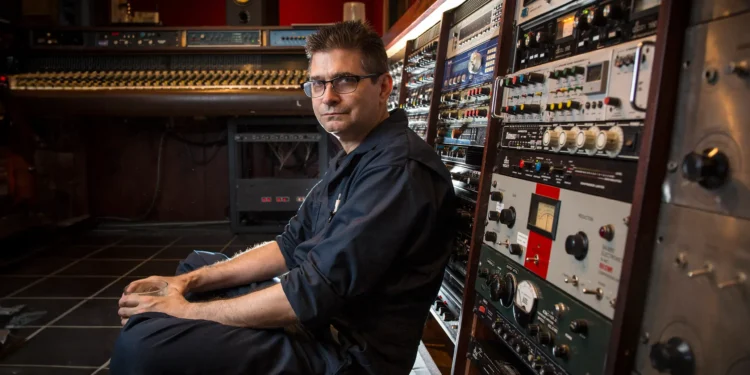
Few figures in modern recording history have shaped the sound of alternative music as profoundly as Steve Albini. Often described as one of the most principled and uncompromising engineers of his generation, he rejected industry gloss in favor of sonic honesty. While many casually labeled him a producer, Albini consistently resisted that title, preferring the more technical and precise description: audio engineer.
That distinction was not semantic. For Albini, language reflected philosophy. A producer, in the traditional sense, often guides artistic direction, influences songwriting, and shapes aesthetic choices. But Albini believed that creative ownership should remain entirely with the band. His role, as he saw it, was to capture—not control—the music.
Working on landmark albums such as Surfer Rosa by Pixies and In Utero by Nirvana, Steve Albini helped define the raw, confrontational sonic identity of 1990s alternative rock. Yet his influence stretches far beyond grunge. The ethos he championed continues to resonate in studios worldwide.
Capturing Reality Instead of Manufacturing It
At the core of Steve Albini’s philosophy was a deceptively simple principle: record the band as they truly sound. In an era increasingly dominated by heavy processing, pitch correction, and layered overdubs, Albini pursued authenticity above all else.
Rather than constructing a “perfect” digital artifact, Steve Albini sought to document the chemistry between musicians playing together in real time. He frequently positioned bands in the same room, carefully arranging microphones to preserve natural bleed and spatial interaction. This technique created recordings that felt alive—dynamic, imperfect, and human.
For Albini, energy mattered more than polish. Slight fluctuations in tempo or subtle performance irregularities were not flaws to be erased; they were evidence of life. In this way, he challenged the growing belief that music should be digitally optimized rather than emotionally truthful.
Engineer, Not Auteur
One of the most defining aspects of Albini’s career was his rejection of creative authorship over artists’ work. Many producers cultivate a recognizable sonic signature that stamps each project with their identity. In contrast, Albini deliberately minimized his imprint.
He often described his job as technical problem-solving: selecting microphones, adjusting acoustics, and ensuring signal integrity. For Albini, imposing artistic direction crossed an ethical line. Bands retained full authority over arrangement and tone decisions.
This perspective stemmed from Steve Albini’s own experiences as a musician. Having witnessed producers override artists’ intentions, he developed a studio code grounded in respect. In doing so, Steve Albini reframed the engineer as a facilitator rather than a creative overlord.
Analogue Commitment in a Digital Era
As digital recording tools became ubiquitous, Steve Albini remained steadfast in his commitment to analogue tape. To some, this seemed nostalgic. To him, it was practical and philosophical.
Analogue tape imposes limits. It discourages endless editing and forces musicians to deliver cohesive performances. For Albini, those constraints preserved authenticity. Digital systems, by contrast, enabled infinite revision and artificial correction, sometimes stripping performances of their immediacy.
Importantly, Albini was not anti-technology. He was anti-manipulation. His preference for tape reflected a belief that music should document a moment rather than simulate one. In an age where even sound design in online games often relies on hyper-polished, constructed audio environments, Steve Albini’s philosophy feels almost radical.
Raw Sound Across Genres
Although often associated with alternative rock, Albini recorded thousands of albums across genres. Acoustic projects, experimental compositions, and underground acts all sought the clarity that Albini’s methods provided.
His recordings are frequently described as spatially vivid. Listeners feel as though they are inside the rehearsal space, not observing a studio fabrication. This immersive realism became a hallmark of Albini’s work.
Artists who wanted their emotional core intact—unsoftened by commercial smoothing—turned to Steve Albini precisely because he refused to beautify what did not need beautification. That discipline gave his recordings longevity.
Studio Ethics and Financial Transparency
Another often overlooked aspect of Albini’s legacy was his ethical stance on compensation. Unlike many producers who claimed royalty percentages, Albini charged a flat fee. He believed artists should own their work and reap its rewards.
This financial philosophy mirrored his technical one: clarity, fairness, and minimal interference. His transparency fostered trust, especially among independent artists wary of exploitative contracts.
His studio, Electrical Audio, became synonymous with this principled approach. For many musicians, working with Albini meant entering a space governed by integrity rather than ego.
Influence Beyond Rock Music
The cultural reach of Albini extends beyond alternative bands. His commitment to sonic authenticity resonates in unexpected spaces. Even contemporary discussions around music for wellness and mindfulness practices emphasize organic soundscapes and natural resonance—values long championed by Albini.
By prioritizing room acoustics and genuine performance dynamics, Steve Albini anticipated a broader cultural desire for unfiltered sound. In an era saturated with digital perfection, authenticity itself became a form of innovation.
The Legacy of Sonic Truth
Ultimately, Steve Albini leaves behind more than a discography. He leaves a philosophy. His insistence on capturing reality rather than constructing illusion challenges prevailing norms in modern production.
As recording technology continues to evolve, the questions raised by Albini remain relevant:
Should music be perfected—or preserved?
Should engineers shape art—or document it?
In a world where sound can be endlessly manipulated, the approach championed by Albini reminds us that imperfection often carries the deepest emotional weight. His recordings endure not because they are flawless, but because they are honest.
And perhaps that is the truest legacy of Steve Albini—a commitment to sound that feels lived rather than manufactured.